
The 2023 film The Holdovers captivated audiences with its nostalgic tone, wintry atmosphere, and richly detailed portrayal of a 1970s New England boarding school. Directed by Alexander Payne and starring Paul Giamatti, the film tells the story of a curmudgeonly teacher left behind at a prestigious prep school over Christmas break with a handful of students who have nowhere to go. While the fictional school in the movie is called Barton Academy, the real locations behind it are scattered across Massachusetts.
Rather than filming at a single campus, the production team combined multiple historic schools and towns to create a seamless, believable world. The result is a cinematic portrait of New England that feels both intimate and authentic. Understanding where The Holdovers was filmed offers insight into how its visual identity was carefully constructed and why Massachusetts was the perfect backdrop for this emotionally resonant story.
Why Massachusetts Was Chosen
The entire production was centered in Massachusetts, a choice that deeply influenced the film’s tone and authenticity. The state is home to some of the oldest and most architecturally striking preparatory schools in the United States. With their brick buildings, chapel spires, snow-covered quads, and centuries-old traditions, these institutions provided the ideal setting for a story about isolation, privilege, discipline, and unexpected connection.
Massachusetts also offers a diverse range of landscapes within a relatively compact area. From urban streets in historic cities to quiet rural towns and picturesque villages, the state allowed the production to capture different moods without relocating far from its primary base. The wintry climate during principal photography, which took place from January through March 2022, further enhanced the seasonal realism the film required.
Constructing Barton Academy from Multiple Campuses
One of the most fascinating aspects of the film’s production is that Barton Academy does not exist in real life. Instead, it was carefully assembled from various real institutions. No single school had every architectural feature the filmmakers wanted, so they blended different locations to form one cohesive fictional campus.
Groton School
Groton School served as one of the key filming locations. Known for its impressive chapel and stately brick buildings, Groton contributed important exterior elements to the film. The campus exudes old-world prestige, which perfectly aligns with the image of an elite New England boarding school.
The chapel scenes in particular benefited from Groton’s historic architecture. Its soaring ceilings and traditional design reinforced the disciplined and formal atmosphere associated with Barton Academy. Even viewers unfamiliar with Groton can sense the authenticity embedded in these scenes.
Deerfield Academy
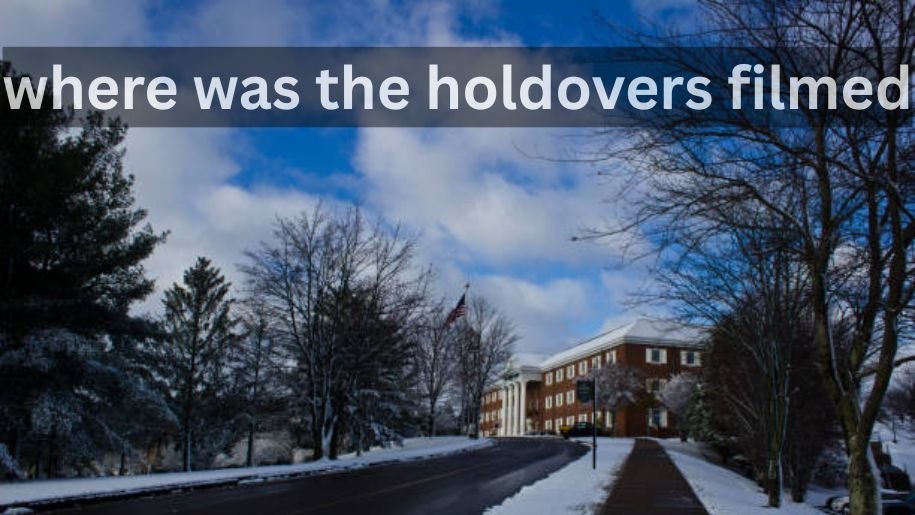
Another major contributor was Deerfield Academy. Located in western Massachusetts, Deerfield provided exterior shots, including sweeping lawn views and building façades. Its campus layout and colonial-style structures align seamlessly with the film’s 1970s aesthetic.
The school’s classic New England charm made it an ideal choice for wide shots that establish Barton Academy’s prestige and scale. Snow-covered pathways and symmetrical brick buildings created the impression of an institution steeped in tradition.
Northfield Mount Hermon School
Northfield Mount Hermon School also played a role in shaping the fictional academy. Certain chapel and exterior scenes were filmed here, adding yet another architectural layer to Barton’s composite identity.
The inclusion of Northfield Mount Hermon helped ensure visual variety while maintaining stylistic consistency. Each campus chosen had its own personality, but all shared a similar historical character, allowing them to blend naturally on screen.
St. Mark’s School
Interior scenes required a different set of features, and St. Mark’s School provided many of them. The dining hall, gymnasium, faculty spaces, and hallways were filmed here. These interiors were crucial because much of the film unfolds within enclosed environments during the winter break.
The dining hall scenes, where faculty and remaining students gather, carry emotional weight. The warm wood tones and traditional design elements of St. Mark’s interiors gave these moments a lived-in realism that set construction alone could not replicate.
Fairhaven High School
Interestingly, not all filming occurred at private boarding schools. Fairhaven High School was used for certain interior sequences, including study hall and auditorium scenes. The building’s Gothic Revival architecture resembles that of elite preparatory institutions, making it a convincing addition to Barton Academy’s cinematic identity.
Filming at Fairhaven High School allowed the production to capture grand interior spaces that might not have been available at other campuses during the academic year.
Urban Scenes in Boston
While the boarding school dominates the film, certain scenes required a shift to city environments. Parts of the movie were filmed in Boston, whose historic streets and public spaces naturally fit the 1970s setting.
Boston’s architecture already carries a sense of age and continuity, reducing the need for extensive digital alterations. Brick sidewalks, period-appropriate storefronts, and historic neighborhoods helped transport viewers back in time. The city sequences provide a visual contrast to the insulated world of Barton Academy, reinforcing the emotional themes of separation and connection.
Additional Massachusetts Locations
Beyond the major school campuses and Boston, several other towns contributed to the film’s setting. Somerville was used for street scenes that required a slightly more contemporary urban feel while still maintaining historical character. Its dense residential neighborhoods and classic New England storefronts blended seamlessly into the film’s aesthetic.
The picturesque village of Shelburne Falls also served as a filming location. Known for its small-town charm, Shelburne Falls provided intimate exterior backdrops that reinforced the quiet, reflective tone of the story.
A memorable interior scene was shot at the Pleasant Cafe, a long-standing Boston establishment. Its traditional interior and neighborhood atmosphere fit perfectly within the film’s period setting. Using real local businesses instead of constructed sets further anchored the story in authentic New England culture.
The Importance of Authentic Architecture
The decision to use real schools rather than constructing an entire campus on soundstages added depth to the film’s visual storytelling. Authentic brickwork, aged wood, chapel details, and snow-covered courtyards contribute to a tactile sense of place. Viewers can feel the cold winter air and the weight of institutional history in every frame.
These locations also helped actors inhabit their roles more fully. Walking through real hallways and standing inside historic chapels naturally shapes performance. For a character-driven film like The Holdovers, that sense of immersion was essential.
Capturing the 1970s Atmosphere
Although the film was shot in 2022, great care was taken to recreate the 1970s setting. Production designers minimized modern elements and emphasized period-appropriate details. Fortunately, many of the Massachusetts schools used have preserved much of their historical architecture, making them ideal time capsules.
Snowfall during filming added another layer of realism. Rather than relying solely on artificial effects, the production benefited from authentic winter conditions. The icy landscapes and overcast skies reinforce the themes of isolation and introspection central to the story.
The Composite Illusion of Barton Academy
What makes the filming of The Holdovers particularly impressive is how seamlessly the various locations merge on screen. Audiences rarely suspect that the chapel might be at one school, the dining hall at another, and the exterior lawn somewhere else entirely.
This composite approach reflects a broader filmmaking strategy often used in period dramas. By selecting the strongest features of each site, the production team crafted an idealized version of a New England prep school. The result feels cohesive and believable, even though it is geographically fragmented.
Economic and Cultural Impact on Massachusetts
Filming across Massachusetts also had practical benefits. Local crews, businesses, and schools participated in the production process. Hosting a major film brought economic activity to towns ranging from western Massachusetts communities to the Boston metropolitan area.
Additionally, the film showcases the state’s architectural heritage to a global audience. Viewers who were unfamiliar with Massachusetts boarding schools now associate them with the film’s distinct aesthetic. This visibility often boosts tourism interest in filming locations.
A Love Letter to New England
In many ways, the choice of filming locations turns The Holdovers into a quiet tribute to New England itself. The region’s austere winters, colonial architecture, and academic traditions shape the story’s emotional landscape.
The snow-blanketed campuses evoke both beauty and loneliness. The historic dining halls suggest continuity and ritual. The city streets introduce warmth and humanity beyond institutional walls. Each location plays a subtle but significant narrative role.
Conclusion
So where was The Holdovers filmed? The answer lies across multiple historic campuses and towns throughout Massachusetts. From Groton School’s chapel to Deerfield Academy’s exteriors, from St. Mark’s interiors to Fairhaven High School’s grand spaces, the fictional Barton Academy is a carefully assembled mosaic. Add to that the urban textures of Boston, the charm of Shelburne Falls, and select neighborhood locations, and the film’s world comes fully into focus.
By choosing authentic New England settings and blending them with careful production design, the filmmakers created a setting that feels timeless and genuine. Massachusetts was not merely a backdrop; it became a character in its own right, shaping the tone, mood, and emotional depth of the film.
Frequently Asked Questions About Where The Holdovers Was Filmed
Was Barton Academy a real school?
No, Barton Academy is fictional. It was created by combining multiple real Massachusetts schools to form one cohesive on-screen campus.
In which state was The Holdovers primarily filmed?
The film was shot almost entirely in Massachusetts, using both private school campuses and public locations.
Were the winter scenes filmed in real snow?
Yes, much of the production took place during the winter months, allowing real snow and authentic seasonal conditions to enhance the atmosphere.
Did filming take place in Boston?
Yes, several scenes were filmed in Boston, particularly for city sequences that required historic urban backdrops.
Why were multiple schools used instead of one?
No single campus offered all the architectural features needed. The filmmakers selected specific buildings and interiors from different schools to create the ideal version of Barton Academy.