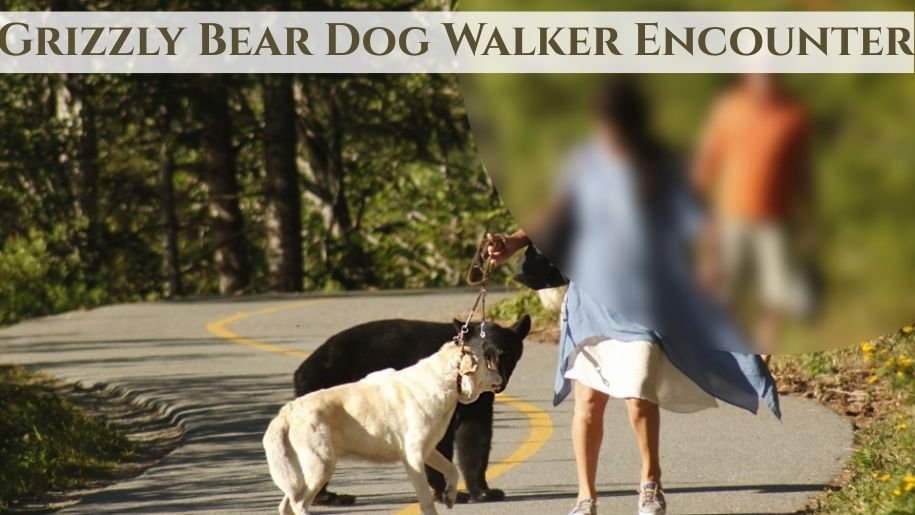

Walking a dog in natural landscapes can be a peaceful and rewarding experience. Forest trails, mountain paths, and wilderness parks provide both humans and their pets with opportunities to exercise and connect with nature. However, in regions where grizzly bears live, these outings can sometimes lead to unexpected wildlife encounters. One of the most widely discussed scenarios in wildlife safety is the grizzly bear dog walker encounter, a situation where a person walking their dog unexpectedly comes face to face with a grizzly bear.
While such encounters are relatively rare, they can become dangerous if certain conditions are present. Dogs can unintentionally trigger defensive reactions in bears, especially when they roam off-leash or chase wildlife. Understanding how these encounters happen, why dogs play a significant role, and how people can respond safely is essential for anyone exploring bear habitat.
This article explores the dynamics of grizzly bear dog walker encounters, examining bear behavior, the role of dogs in escalating situations, real-world examples, and practical safety strategies for reducing risks.
Understanding Grizzly Bears and Their Natural Behavior
Grizzly bears are among the most powerful mammals found in North America. Known for their massive size, strong muscles, and distinctive shoulder hump, they inhabit forests, mountains, and remote wilderness regions. Despite their intimidating appearance, grizzly bears generally prefer to avoid humans.
Grizzlies are omnivores, meaning they eat a wide variety of foods including berries, roots, insects, fish, and occasionally large mammals. Their behavior is largely driven by the search for food and the protection of their territory or offspring.
In most situations, bears will move away if they detect human presence early. However, problems arise when encounters occur suddenly or when the bear perceives a threat. When a bear is startled at close range, particularly if cubs or food sources are nearby, it may react defensively.
These defensive reactions are the most common reason behind bear attacks. The bear is not hunting the human but rather responding to what it believes is a danger.
Why Dog Walkers Are More Likely to Encounter Bears
Many wildlife experts note that encounters between bears and dog walkers happen more frequently than encounters with hikers alone. The presence of a dog can significantly change the dynamics of an interaction.
Dogs tend to move ahead of their owners, exploring the trail and surrounding vegetation. When a dog encounters a bear, it may bark, chase, or approach the animal out of curiosity or instinct. This behavior can startle the bear and trigger a defensive response.
Another common scenario occurs when a dog approaches a bear and then runs back toward its owner for protection. In doing so, the dog may unintentionally lead the bear directly toward the human.
This chain of events creates a sudden confrontation in which the person and the bear are face to face at very close distance. In such moments, both animals may feel threatened, increasing the chances of aggressive behavior.
Typical Scenario of a Grizzly Bear Dog Walker Encounter
Most grizzly bear dog walker encounters follow a similar pattern. The person is walking a dog on a forest trail, often in a region known to have bear activity. The dog is either off-leash or walking ahead of the owner.
The trail may include dense vegetation, hills, or blind corners that limit visibility. Because bears move quietly through the forest, neither the human nor the dog may detect the animal until they are very close.
When the dog notices the bear, it may bark loudly or run toward it. This sudden interaction startles the bear and triggers a defensive reaction.
The bear may charge or bluff charge, a behavior in which the bear rushes forward but stops short of attacking. In some cases, if the bear feels trapped or threatened, it may make physical contact with the person.
These encounters usually unfold very quickly, often within a matter of seconds.
Defensive vs. Predatory Bear Behavior
Understanding the difference between defensive and predatory bear behavior is crucial when discussing grizzly bear encounters.
Most incidents involving dog walkers are defensive encounters. The bear reacts because it feels threatened, surprised, or protective of its cubs or food.
Defensive behavior may include:
- Huffing or snorting sounds
- Jaw popping
- Bluff charges
- Swatting with paws
The goal of the bear in these situations is typically to drive away the perceived threat rather than to hunt.
Predatory attacks, in contrast, are extremely rare. In these cases, the bear treats the human as prey. Such incidents usually occur in remote wilderness areas and involve different behavioral signals, such as a bear quietly following a person.
For dog walkers, defensive encounters are far more common because the dog’s behavior often triggers the bear’s protective instincts.
Environmental Factors That Increase the Risk of Encounters
Certain environmental conditions make bear encounters more likely. One important factor is the overlap between human recreational areas and bear habitats. As more people visit wilderness parks and forest trails, the chances of unexpected encounters increase.
Seasonal changes also play a role. In late summer and early autumn, bears are highly active as they search for food to prepare for winter hibernation. During this time, they may travel long distances and spend more time near trails where berries and other foods are abundant.
Dense vegetation can also contribute to encounters. Thick brush and narrow trails reduce visibility, making it difficult for both humans and bears to detect each other at a safe distance.
Another factor is the presence of cubs. Mother bears are highly protective of their young and may react aggressively if they believe their cubs are in danger.
Real-World Examples of Dog Walker Bear Encounters
Several real-world incidents have highlighted the risks associated with walking dogs in bear territory.
In one widely reported case, a woman jogging with her dog unexpectedly encountered multiple grizzly bears on a remote trail. The dog initially chased smaller bears in the area, which caused a larger bear to become defensive. The bear attacked the runner, causing serious injuries before the dog returned and helped drive the animal away.
Another incident involved a hiker whose off-leash dog approached a bear feeding on berries near a trail. The startled bear chased the dog, which ran back to its owner. The bear followed closely behind, resulting in a sudden confrontation that required the hiker to use bear spray to deter the animal.
These events demonstrate how quickly an encounter can escalate and how dogs often play a central role in triggering the interaction.
The Role of Bear Spray in Preventing Serious Attacks
Bear spray is widely considered one of the most effective tools for preventing serious bear attacks. It is a powerful deterrent designed to temporarily disable a bear’s sense of smell and vision.
When deployed correctly, bear spray creates a cloud of irritant that causes intense discomfort for the animal. This usually stops the bear’s advance and encourages it to retreat.
Wildlife authorities strongly recommend carrying bear spray when traveling in grizzly habitat, especially when walking dogs. However, the spray must be easily accessible and the user should understand how to deploy it quickly.
Bear spray is most effective when used at close range during an aggressive approach.
Best Practices for Walking Dogs in Bear Habitat
Reducing the risk of a bear encounter requires awareness and preparation. One of the most important steps is keeping dogs on a leash. A controlled dog is far less likely to run ahead and provoke wildlife.
Making noise while walking on trails can also help. Talking, clapping, or using bear bells alerts animals to human presence, allowing them time to move away.
Avoiding areas with dense vegetation or limited visibility can reduce the chance of surprise encounters. Walking during daylight hours also helps improve awareness of surroundings.
It is equally important to watch for signs of bear activity, such as tracks, scat, or disturbed ground. If these signs are present, it may be wise to turn back and choose a different route.
What to Do If You Encounter a Grizzly Bear While Walking a Dog
Despite taking precautions, encounters can still happen. Knowing how to respond calmly can greatly improve the chances of a safe outcome.
If a bear appears on the trail, the first step is to remain calm and avoid running. Running may trigger the bear’s instinct to chase.
The dog should be kept close and under control. If the dog is off-leash, calling it back immediately is essential.
Slowly backing away while speaking in a calm voice can help signal to the bear that you are not a threat. Sudden movements should be avoided.
If the bear approaches aggressively, bear spray should be prepared and used when the animal comes within effective range.
In some defensive attacks, wildlife experts advise playing dead by lying face down and protecting the neck. However, this strategy should only be used if the bear makes contact and the attack appears defensive.
Increasing Awareness and Education
Education plays a crucial role in preventing dangerous encounters between humans and wildlife. Many national parks and wildlife organizations provide guidance on safe behavior in bear habitat.
Public awareness campaigns often emphasize responsible pet management, including leash requirements in bear-prone areas.
By understanding how bears behave and how dogs can influence those behaviors, people can make better decisions while exploring wilderness areas.
Ultimately, coexistence between humans and wildlife depends on knowledge, respect, and caution.
Conclusion
Grizzly bear dog walker encounters highlight the complex relationship between humans, pets, and wildlife. While grizzly bears are generally not interested in attacking humans, certain circumstances—particularly those involving dogs—can create situations where defensive reactions occur.
Dogs may unknowingly provoke bears through barking, chasing, or approaching too closely. When these actions bring the bear into direct contact with the owner, a dangerous confrontation can develop quickly.
However, most of these encounters can be prevented through simple precautions such as keeping dogs on a leash, staying aware of surroundings, and carrying bear spray in bear habitat.
Understanding bear behavior and respecting wildlife territory are essential for anyone who enjoys outdoor activities in regions where grizzly bears live. With proper knowledge and preparation, people and wildlife can share these natural landscapes more safely.
Frequently Asked Questions
Why do dogs increase the risk of grizzly bear encounters?
Dogs may bark at or chase bears, which startles the animal and triggers a defensive reaction. When the dog runs back to its owner, it may lead the bear directly to the person.
Are grizzly bear attacks on dog walkers common?
No, they are relatively rare. However, incidents involving dogs occur more frequently than encounters with hikers who do not have pets.
What should you do if your dog runs toward a bear?
Call the dog back immediately and remain calm. Avoid running, as this can provoke the bear to chase.
Is bear spray effective during an encounter?
Yes, bear spray is considered one of the most effective deterrents against aggressive bears when used properly.
Should dogs always be kept on a leash in bear territory?
Yes, keeping dogs on a leash significantly reduces the chances of them provoking wildlife and causing dangerous encounters.