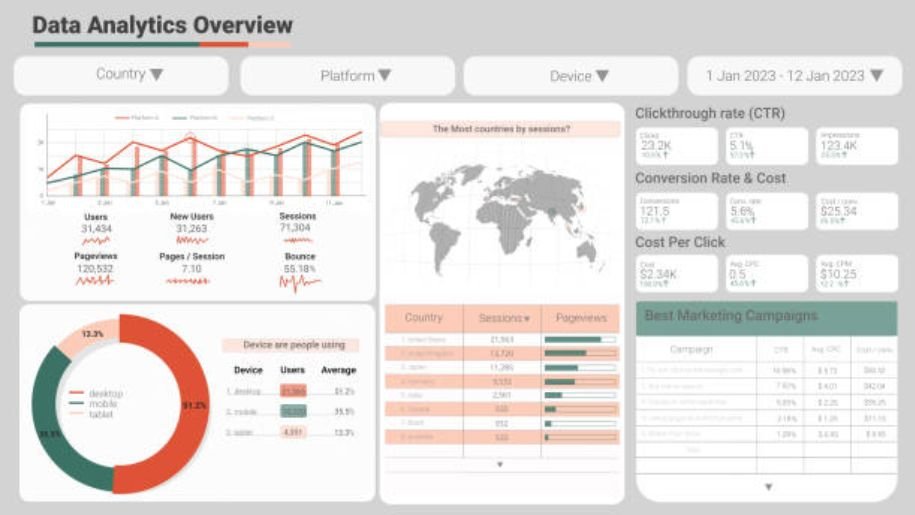

In today’s digital-first business environment, marketing generates an overwhelming amount of data from multiple channels—social media, paid ads, websites, email campaigns, and more. While this data is valuable, it can quickly become difficult to manage and interpret without the right tools. This is where a marketing dashboard becomes essential.
A marketing dashboard is not just a reporting tool; it is a strategic asset that enables businesses to monitor performance, uncover insights, and make informed decisions. By transforming raw data into meaningful visualizations, it helps marketers understand what is working, what is not, and where improvements can be made.
This article provides a detailed exploration of marketing dashboards, including their structure, types, benefits, implementation, and best practices.
What is a Marketing Dashboard?
A marketing dashboard is a visual interface that consolidates and displays key marketing data and performance indicators in one place. It pulls information from multiple sources and presents it through charts, graphs, and metrics that are easy to understand.
Instead of manually compiling reports from different platforms, marketers can rely on a dashboard to get a real-time overview of their campaigns and overall marketing performance.
In essence, a marketing dashboard answers critical questions such as:
- How are current campaigns performing?
- Which channels are driving the most traffic and conversions?
- Is the marketing budget being used effectively?
Why Marketing Dashboards Matter
Modern marketing is data-driven, and decisions based on assumptions often lead to inefficiencies. Marketing dashboards solve this problem by offering clarity and direction.
They play a crucial role in:
- Simplifying complex data by presenting it visually
- Saving time by automating reporting processes
- Improving decision-making through real-time insights
- Aligning teams by providing a single source of truth
Without a dashboard, marketers may spend hours collecting and analyzing data manually, increasing the risk of errors and delays.
Core Components of a Marketing Dashboard
A well-designed marketing dashboard consists of several essential components that work together to provide meaningful insights.
Key Performance Indicators (KPIs)
KPIs are the backbone of any dashboard. They represent the most important metrics aligned with business goals. These could include traffic, conversion rates, revenue, or customer acquisition cost.
The key is to focus on relevant and actionable KPIs rather than tracking every available metric.
Data Sources
A marketing dashboard integrates data from various platforms such as:
- Website analytics tools
- Social media platforms
- Advertising networks
- Customer relationship management systems
The integration ensures that all data is centralized and consistent.
Data Visualization
Visualization is what makes dashboards powerful. Instead of raw numbers, data is presented through:
- Line charts for trends
- Bar charts for comparisons
- Pie charts for distribution
- Scorecards for quick summaries
These visual elements make it easier to interpret data at a glance.
Filters and Segmentation
Dashboards often include filters that allow users to view data based on:
- Time periods (daily, weekly, monthly)
- Campaigns or channels
- Geographic locations
- Audience segments
This flexibility enables deeper analysis and more precise insights.
Key Metrics in a Marketing Dashboard
The effectiveness of a marketing dashboard depends largely on the metrics it tracks. These metrics are usually categorized based on different stages of the customer journey.
Acquisition Metrics
These metrics measure how well a business attracts new visitors or potential customers. Common examples include website traffic, cost per click, and impressions.
Engagement Metrics
Engagement metrics show how users interact with content. Metrics such as click-through rate, bounce rate, and time on site indicate how engaging and relevant the content is.
Conversion Metrics
Conversion metrics focus on the actions users take, such as signing up for a newsletter or making a purchase. Conversion rate and cost per acquisition are key indicators in this category.
Revenue Metrics
These metrics evaluate the financial impact of marketing efforts. Return on investment, return on ad spend, and customer lifetime value are commonly used.
Retention Metrics
Retention metrics measure how well a business keeps its customers. Repeat purchases and customer churn rate are important indicators of long-term success.
Types of Marketing Dashboards
Different businesses and teams require different types of dashboards depending on their goals and responsibilities.
Operational Dashboards
These dashboards provide real-time data and are used for daily monitoring. They help marketers quickly identify issues and take immediate action.
Analytical Dashboards
Analytical dashboards focus on historical data and trends. They are used to evaluate past performance and understand patterns over time.
Strategic Dashboards
Strategic dashboards are high-level and designed for executives. They highlight key outcomes such as revenue growth, ROI, and overall marketing effectiveness.
Channel-Specific Dashboards
These dashboards focus on individual marketing channels, such as:
- Social media dashboards for engagement and reach
- SEO dashboards for organic traffic and keyword rankings
- Email dashboards for open rates and click rates
- Paid advertising dashboards for cost and conversion metrics
Each type serves a unique purpose and can be customized according to business needs.
How Marketing Dashboards Work
Marketing dashboards function through a series of steps that transform raw data into actionable insights.
First, data is collected from multiple sources through integrations or APIs. This data is then processed and cleaned to ensure accuracy and consistency. Once processed, it is visualized using charts and graphs.
Users can then analyze the data, identify trends, and make decisions based on the insights provided. The entire process is often automated, allowing dashboards to update in real time.
Benefits of Using a Marketing Dashboard
Improved Decision-Making
With access to real-time data, marketers can make informed decisions quickly. This reduces reliance on guesswork and improves overall strategy.
Time Efficiency
Automated reporting eliminates the need for manual data collection and analysis, saving valuable time.
Enhanced Performance Tracking
Dashboards make it easy to track campaign performance and identify areas for improvement.
Better Communication
A marketing dashboard provides a clear and consistent view of performance, making it easier to communicate results to stakeholders.
Increased Accountability
By clearly displaying metrics and results, dashboards encourage accountability within marketing teams.
Designing an Effective Marketing Dashboard
Creating an effective dashboard requires careful planning and a clear understanding of business goals.
Define Objectives
Before building a dashboard, it is important to identify what you want to achieve. This will determine which metrics and data sources to include.
Choose the Right Metrics
Avoid overcrowding the dashboard with too many metrics. Focus on those that directly impact business outcomes.
Keep It Simple
A clean and simple design improves readability and usability. Avoid unnecessary complexity.
Ensure Data Accuracy
Accurate data is critical for reliable insights. Regularly check integrations and data sources to maintain quality.
Customize for the Audience
Different users have different needs. A dashboard for executives should be high-level, while one for analysts can be more detailed.
Challenges of Marketing Dashboards
While marketing dashboards offer many benefits, they also come with certain challenges.
Data Integration Issues
Combining data from multiple sources can be complex and may require technical expertise.
Data Overload
Including too many metrics can make the dashboard confusing and less effective.
Maintenance
Dashboards require regular updates and maintenance to ensure they remain relevant and accurate.
Misinterpretation
Without proper understanding, users may misinterpret data and make incorrect decisions.
Best Practices for Marketing Dashboards
To maximize the effectiveness of a marketing dashboard, it is important to follow best practices.
Focus on actionable insights rather than vanity metrics. Ensure that every metric included has a clear purpose. Use consistent formatting and labeling to improve clarity. Regularly review and update the dashboard to reflect changing business needs.
It is also important to test the dashboard with users and gather feedback to improve its usability.
Real-World Applications
Marketing dashboards are used across industries and business sizes.
A small business may use a dashboard to track website traffic and social media engagement. A large enterprise may use multiple dashboards to monitor global campaigns, customer behavior, and revenue performance.
In e-commerce, dashboards help track sales, customer acquisition, and product performance. In B2B companies, they are used to monitor lead generation and conversion rates.
Future of Marketing Dashboards
As technology continues to evolve, marketing dashboards are becoming more advanced.
Artificial intelligence and machine learning are being integrated to provide predictive insights and recommendations. Real-time data processing is improving, allowing for faster and more accurate analysis.
Customization and personalization are also increasing, enabling businesses to tailor dashboards to specific needs and preferences.
Conclusion
A marketing dashboard is an essential tool for modern businesses. It transforms complex data into clear, actionable insights, enabling marketers to make better decisions and improve performance.
By centralizing data, automating reporting, and providing real-time visibility, marketing dashboards empower teams to work more efficiently and strategically. However, their effectiveness depends on proper design, relevant metrics, and continuous optimization.
In a world where data drives success, a well-built marketing dashboard is not just useful—it is indispensable.
Frequently Asked Questions
What is the main purpose of a marketing dashboard?
The main purpose of a marketing dashboard is to provide a centralized view of marketing performance, helping businesses track key metrics and make data-driven decisions.
What are the most important metrics in a marketing dashboard?
Important metrics include traffic, conversion rate, cost per acquisition, return on investment, and customer lifetime value, depending on business goals.
How often should a marketing dashboard be updated?
Most dashboards are updated in real time or daily to ensure accurate and timely insights.
Who uses marketing dashboards?
Marketing dashboards are used by marketers, analysts, managers, and executives to monitor performance and guide strategy.
Can small businesses benefit from marketing dashboards?
Yes, marketing dashboards are valuable for businesses of all sizes, as they help simplify data and improve decision-making.