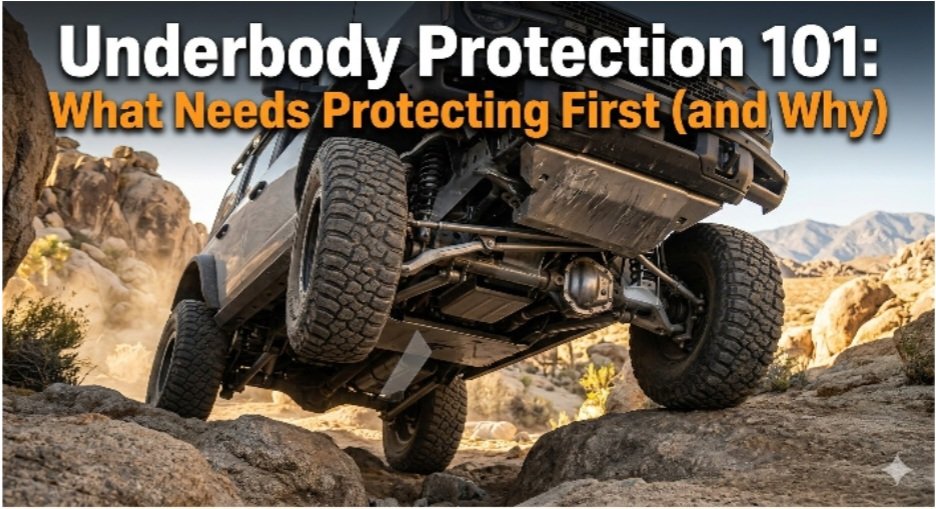

Alt text: A visual showing a bottom view of a 4WD driving over rocks.
The phrase underbody protection 4wd gets thrown around like every vehicle needs armour from nose to tail on day one. That is not how smart builds usually happen. The better question is simpler. What sits lowest, what costs the most when it gets hit, and what sort of terrain is the vehicle actually going to see?
A trusted Australian 4WD accessories supplier groups this part of a build under Underbody Protection, with multiple plate systems built around the front, sump, transmission and gearbox areas rather than pretending every trip needs the same coverage.
Start With the Front of the Belly, Not the Full Fantasy Build
If the budget only stretches to the first layer of underbody protection, start with the places that cop the earliest and nastiest hits. Underbody protection recurring focus is clear: protect the intercooler and radiator area, the engine oil sump, and the gearbox or transmission.
That is a very practical order because those are the parts most likely to ruin a trip when a rock, washout edge, stump, or hard ground strike finds them first. The premium systems are also described as targeting the most common strike zones and deflecting force into load-bearing elements rather than leaving vulnerable parts exposed.
Priority One Is Engine Bay and Sump Protection
If you only fit one set of bash plates, make it the section protecting the engine bay and sump. That is the bit that makes the most sense for beach work, touring tracks, hidden washouts, and everyday off-road slips where the front belly lands before the rest of the vehicle does.
Why it goes first:
- The sump is expensive to ignore
- The radiator and intercooler zone is vulnerable to frontal belly hits
- The front section usually meets the obstacle before the rest of the driveline does
- Even mild touring can produce ugly ground strikes in the wrong place
Priority Two Is Transmission and Gearbox Coverage
Once the front section is sorted, the next sensible step is transmission and gearbox coverage. This matters more than people think because the first scrape is not always the problem. Sometimes the vehicle clears the front edge, then drags the middle over the crown of a track, a rocky lip, or a steep exit. That is where engine protection alone stops being enough.
For vehicles that tour regularly, the practical pairing is usually engine bay plus transmission or gearbox coverage, not one without the other. The listed underbody systems are repeatedly sold as engine, transmission and gearbox protection together, which tells you where the real risk sits on most modern touring vehicles.
Priority Three Depends on Terrain, Not Ego
This is the part worth being honest about. Not every rig needs maximum plate coverage everywhere. Terrain should decide that.
A basic rule of thumb:
- Beach work and general touring
Start with front, sump, and transmission coverage. That is where the most common knocks happen and where peace of mind is worth the money. A 3 mm mild steel “everyday touring” option is specifically framed as the lighter choice for beach trips and touring. - Rutted tracks, rocky climbs, and sharper ledges
Go heavier and think harder about full belly coverage. The 4 mm stainless option is pitched for harder use where more serious impact resistance matters. - Vehicles that belly out often
Start planning beyond basic plates and include Chassis Protection in the wider conversation, because once the rails and underside are regularly contacting terrain, the build has moved past light-duty protection needs.
That is the smarter way to look at chassis protection too. Fit it because the terrain justifies it, not because the shopping cart looked a bit empty.
Material Choice Matters, but So Does Weight
A lot of underbody debates get stuck on thickness alone. That is only half the story. The listed systems split between 3 mm mild steel powder-coated plates for everyday touring and 4 mm stainless steel for heavier punishment. That gives a pretty clean buying rule.
Pick the lighter option if:
- The vehicle is a tourer, not a rock crawler
- Weight matters because the build already carries barwork, drawers, or camping gear
- The goal is sensible protection, not punishment-proof bragging rights
Pick the heavier option if:
- The vehicle sees harsher terrain regularly
- Belly strikes are more than a once-in-a-blue-moon event
- You want more impact and penetration resistance and can live with the weight penalty
The premium plate also noted heavy-duty 4 mm steel construction, EDP e-coating, and powder coating for corrosion resistance, which matters for vehicles doing wet roads, beach runs, and long-term touring use.
The Stuff People Forget After Fitting Plates
Underbody armour is not a fit-and-forget fairy tale. A very practical point that often gets missed: if dead grass, leaves, or other combustible material build up on the plate around the DPF area, that can create a fire risk, so the plates need regular checking and cleaning. That is not brochure fluff. It is basic ownership.
A sensible maintenance habit looks like this:
- Check plates after rough trips
- Clear grass, mud, and debris from trapped areas
- Inspect hardware and mounting points
- Look for bends or gouges that show the current coverage is doing real work
- Treat water-heavy trips as a reminder to think about Diff Breathers too, because belly protection and drivetrain water protection solve different problems
What to Protect First on a Real-World Build
If the vehicle is being built sensibly rather than all at once, the order usually looks like this:
- Underbody Protection for the engine bay and sump
- Transmission and gearbox coverage as part of the same system
- Heavier material if the terrain keeps stepping up
- Chassis Protection if the underside and rails are genuinely at risk
- Supporting protection choices based on trip style, not forum heroics
Protect the Expensive Bits Before the Trip Teaches You
The best underbody protection 4wd plan is not the longest one. It is the one that protects the most vulnerable and expensive strike zones first, matches the plate strength to the terrain, and does not ignore maintenance once the gear is fitted.
For most touring builds, that means front, sump, and transmission coverage before anything else. After that, let the track decide whether the next step is heavier bash plates, broader chassis protection, or both.
That is usually where a trusted Australian 4WD accessories supplier is most useful, not by selling every plate on the wall, but by helping match the protection package to the way the vehicle actually gets used.