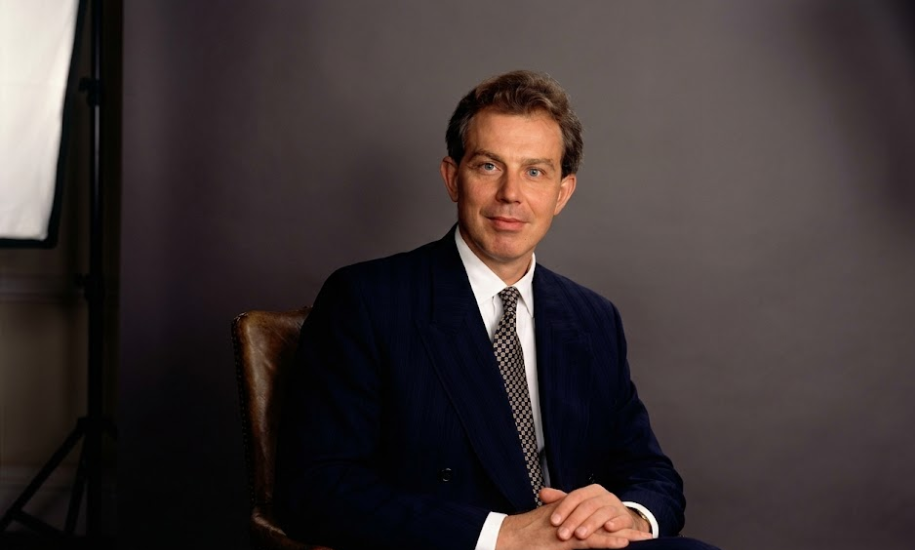

Tony Blair remains one of the most influential and debated political figures in modern British history. Known for reshaping the Labour Party through his “New Labour” vision, Blair led the United Kingdom through a decade of economic reform, global engagement, and political change. His journey—from a young law graduate to Prime Minister—offers a compelling story of ambition, leadership, and legacy.
Early Life and Youth of Tony Blair
Born on May 6, 1953, in Edinburgh, Tony Blair spent much of his childhood in a politically aware family environment. His father, Leo Blair, was a lawyer and aspiring politician, which influenced Blair’s early exposure to public life. Blair was educated at Fettes College, one of Scotland’s most prestigious schools, before attending University of Oxford, where he studied law.
As a young man, Blair was not initially destined for politics. He explored music and even played in a rock band before eventually turning to law. He qualified as a barrister and joined Lincoln’s Inn, where he began building a professional career. However, his growing interest in politics soon pulled him toward the Labour Party, setting the stage for his future leadership.
Entry into Politics and Rise to Power
Tony Blair entered Parliament in 1983 as the Member of Parliament for Sedgefield. During the 1980s, he steadily rose through the ranks of the Labour Party, gaining recognition for his communication skills and moderate political stance. By 1994, following the sudden death of Labour leader John Smith, Blair was elected leader of the party.
Blair’s leadership marked a turning point. He rebranded Labour as “New Labour,” moving it toward the political center and making it more appealing to a broader electorate. His modern approach emphasized economic stability, social justice, and pragmatic governance.
Tony Blair and the Historic 1997 Election
The year 1997 stands as a defining moment in Tony Blair’s career. In the 1997 United Kingdom general election, Blair led Labour to a landslide victory, ending 18 years of Conservative rule. At just 43 years old, he became one of the youngest Prime Ministers in British history.
This victory was not just electoral—it represented a shift in British politics. Blair’s message of modernization, investment in public services, and economic competence resonated strongly with voters. The 1997 win laid the foundation for a decade-long period of Labour dominance.
Tony Blair as Prime Minister (1997–2007)
As Prime Minister, Tony Blair implemented a wide range of reforms that reshaped the UK. His government introduced the national minimum wage, increased funding for healthcare and education, and pursued constitutional reforms, including the devolution of powers to Scotland and Wales.
One of Blair’s most notable achievements was his role in the Good Friday Agreement, which helped bring peace to Northern Ireland after decades of conflict. This agreement is widely regarded as a landmark accomplishment in British and Irish history.
Blair also maintained a strong relationship with the United States, particularly with President George W. Bush. However, this alliance became controversial during the Iraq War in 2003, a decision that significantly impacted Blair’s legacy and public perception.
Previous Offices and Political Roles
Before and during his time as Prime Minister, Tony Blair held several important political positions. He served as Leader of the Labour Party from 1994 to 2007 and as Leader of the Opposition from 1994 to 1997. His long tenure as a Member of Parliament from 1983 to 2007 provided him with deep legislative experience.
These roles helped shape Blair’s leadership style and gave him the platform to implement his vision for a modernized Labour Party and a reformed United Kingdom.
Tony Blair’s Family: Wife and Children
Tony Blair’s personal life has remained relatively stable throughout his political career. He married Cherie Blair (née Cherie Booth) in 1980. Cherie is a distinguished barrister and has been active in human rights advocacy.
The couple has four children: Euan, Nicky, Kathryn, and Leo Blair. Notably, Leo was born in 2000 while Blair was serving as Prime Minister, making him the first child born to a sitting UK Prime Minister in over a century.
Tony Blair Net Worth and Post-Political Career
After leaving office in 2007, Tony Blair transitioned into a highly lucrative career in consulting, public speaking, and international advisory roles. His estimated net worth is believed to range between $60 million and $90 million, though figures vary depending on sources.
Blair established the Tony Blair Institute for Global Change, which focuses on governance, economic development, and global policy. Through this institute and other ventures, Blair has remained active on the global stage.
His post-premiership earnings have drawn both admiration and criticism, with some praising his global influence and others questioning the ethics of his financial activities.
Tony Blair’s Age and Current Life
As of 2026, Tony Blair is 72 years old. Despite stepping away from frontline politics, he continues to play a role in international affairs, offering advice to governments and organizations around the world. His experience and insights remain valued, particularly in areas related to governance and policy reform.
Legacy and Impact
Tony Blair’s legacy is complex and often debated. On one hand, he is credited with modernizing the Labour Party, improving public services, and playing a key role in the Northern Ireland peace process. On the other hand, his involvement in the Iraq War has been a source of lasting controversy.
Blair’s ability to win three consecutive general elections and maintain political dominance for a decade underscores his effectiveness as a leader. His influence on British politics continues to be felt, particularly in the evolution of centrist political strategies.
Conclusion
Tony Blair’s journey from a young law student to one of Britain’s most powerful political leaders is a remarkable story of ambition, reform, and resilience. His tenure as Prime Minister transformed the political landscape of the United Kingdom, leaving a legacy that continues to spark discussion and analysis.
For readers interested in political history, leadership, and modern governance, Tony Blair remains a figure worth studying. For more insightful biographies and in-depth articles like this, visit Brit Feed, your source for engaging and informative content.
you may also read Beth Rigby: The Voice of Modern British Political Journalism