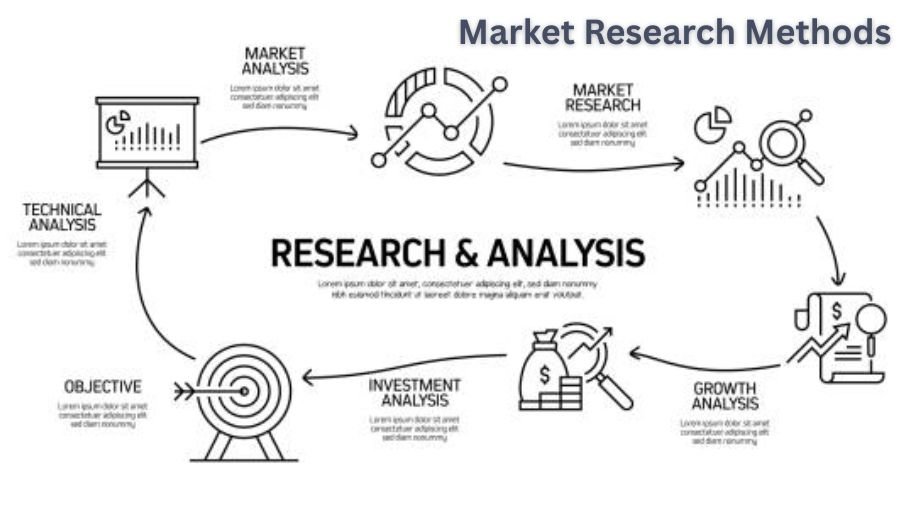

Market research is the foundation of informed business decision-making. In today’s competitive and rapidly evolving marketplace, understanding customer needs, preferences, and behaviors is no longer optional—it is essential. Market research methods provide businesses with structured ways to collect, analyze, and interpret data, enabling them to reduce risks, identify opportunities, and develop effective strategies.
This article explores market research methods in depth, covering their types, applications, advantages, and limitations. Whether you are a startup founder, marketer, or student, this guide will give you a clear and practical understanding of how market research works.
What Are Market Research Methods?
Market research methods are systematic approaches used to gather information about a target market, including customers, competitors, and industry trends. These methods help organizations answer critical questions such as:
- Who are our customers?
- What do they need or want?
- How do they make purchasing decisions?
- What are competitors doing?
The insights gained from market research support product development, pricing strategies, marketing campaigns, and overall business planning.
Types of Market Research Methods
Market research methods are broadly divided into two main categories: primary research and secondary research. Each serves a unique purpose and is often used together for better results.
Primary Research Methods
Primary research involves collecting new data directly from the source. This data is specific to the business’s needs and objectives.
Surveys and Questionnaires
Surveys are one of the most widely used market research methods. They involve asking a set of structured questions to a group of respondents.
Surveys can be conducted online, via email, phone, or face-to-face. They are particularly useful for collecting quantitative data, such as customer preferences, satisfaction levels, and buying habits.
The strength of surveys lies in their scalability. A business can reach hundreds or even thousands of people in a short time. However, poorly designed questions or biased responses can affect the accuracy of results.
Interviews
Interviews are more personal and detailed compared to surveys. They involve direct interaction with participants, either in person or through phone or video calls.
This method allows researchers to explore opinions, motivations, and experiences in depth. Interviews are especially valuable when trying to understand complex behaviors or emotional responses.
However, interviews can be time-consuming and costly, and the smaller sample size may limit generalizability.
Focus Groups
Focus groups involve a small group of participants discussing a specific topic under the guidance of a moderator. This method is commonly used to test new products, advertisements, or ideas.
The group setting encourages interaction and can reveal insights that might not emerge in one-on-one interviews. Participants often build on each other’s responses, leading to richer discussions.
Despite its advantages, focus groups can be influenced by dominant participants or groupthink, which may skew results.
Observation Research
Observation research involves watching how consumers behave in real-life situations. This can take place in physical stores, workplaces, or digital environments such as websites and apps.
Unlike surveys or interviews, observation does not rely on self-reported data. Instead, it captures actual behavior, which can be more accurate.
However, this method does not explain why people behave in a certain way, making it less effective for understanding motivations.
Experiments and A/B Testing
Experimental research is used to determine cause-and-effect relationships. Businesses test different variables, such as pricing, packaging, or advertising messages, to see which performs better.
A/B testing is a common example, where two versions of a product or campaign are compared to identify the more effective option.
This method provides highly reliable results but requires careful planning and controlled conditions.
Secondary Research Methods
Secondary research involves analyzing existing data that has already been collected by others. This method is often used as a starting point for research projects.
Industry Reports and Publications
Businesses can access reports from government agencies, research firms, and trade organizations. These reports provide valuable insights into market size, trends, and forecasts.
Secondary data is cost-effective and quick to obtain. However, it may not be tailored to specific business needs.
Online Data and Analytics
Digital tools provide a wealth of data about customer behavior. Website analytics, social media insights, and search trends help businesses understand how users interact with their platforms.
This type of research is especially useful for tracking real-time performance and identifying patterns.
The challenge lies in interpreting the data correctly and turning it into actionable insights.
Competitor Analysis
Competitor analysis involves studying rival companies to understand their strategies, strengths, and weaknesses.
This includes examining their products, pricing, marketing campaigns, and customer reviews. By doing so, businesses can identify gaps in the market and develop competitive advantages.
However, access to detailed competitor data may be limited.
Qualitative vs Quantitative Research
Market research methods can also be categorized based on the type of data they produce.
Qualitative Research
Qualitative research focuses on understanding the underlying reasons behind consumer behavior. It is exploratory in nature and often uses methods such as interviews, focus groups, and open-ended survey questions.
This type of research provides deep insights into customer emotions, perceptions, and motivations. However, it is not easily measurable and may not represent a large population.
Quantitative Research
Quantitative research deals with numerical data and statistical analysis. It uses structured methods such as surveys, experiments, and analytics.
This approach is useful for measuring trends, testing hypotheses, and making data-driven decisions. The results are easier to generalize but may lack depth in understanding human behavior.
Modern Market Research Techniques
With advancements in technology, new market research methods have emerged, offering faster and more accurate insights.
Social Media Listening
Social media platforms provide valuable information about customer opinions and trends. Businesses monitor conversations, comments, and reviews to understand public sentiment.
This method allows companies to respond quickly to customer feedback and stay ahead of trends.
Customer Journey Mapping
Customer journey mapping involves analyzing every interaction a customer has with a brand, from initial awareness to final purchase.
This method helps businesses identify pain points and improve the overall customer experience.
Big Data Analysis
Big data refers to large and complex datasets that can be analyzed to uncover patterns and trends.
Businesses use advanced tools and algorithms to process this data, enabling them to make more accurate predictions and decisions.
Predictive Analytics
Predictive analytics uses historical data and machine learning techniques to forecast future outcomes.
This method is particularly useful for demand forecasting, customer segmentation, and risk management.
Importance of Market Research Methods
Market research methods play a crucial role in business success. They help organizations:
- Understand customer needs and preferences
- Identify market opportunities
- Reduce risks in decision-making
- Improve products and services
- Develop effective marketing strategies
Without proper research, businesses rely on assumptions, which can lead to costly mistakes.
Choosing the Right Market Research Method
Selecting the appropriate method depends on several factors, including research objectives, budget, time constraints, and target audience.
For example, a company launching a new product may start with qualitative research to explore customer needs and then use quantitative research to validate findings.
In many cases, combining multiple methods provides the most comprehensive insights.
Challenges in Market Research
Despite its benefits, market research comes with challenges.
One common issue is data accuracy. Respondents may provide biased or inaccurate answers, especially in surveys.
Another challenge is cost and time. Some methods, such as interviews and focus groups, require significant resources.
Additionally, analyzing large amounts of data can be complex and requires skilled professionals.
Understanding these challenges helps businesses design more effective research strategies.
Future of Market Research Methods
The future of market research is shaped by technology and data innovation. Artificial intelligence, automation, and real-time analytics are transforming how businesses collect and analyze data.
Personalization is becoming increasingly important, with companies focusing on individual customer experiences rather than broad segments.
As technology continues to evolve, market research methods will become more efficient, accurate, and accessible.
Conclusion
Market research methods are essential tools for understanding the market and making informed decisions. From traditional approaches like surveys and interviews to modern techniques such as big data analysis and predictive analytics, each method offers unique advantages.
The key to effective market research lies in choosing the right combination of methods based on specific objectives. By doing so, businesses can gain valuable insights, reduce uncertainty, and achieve long-term success.
Frequently Asked Questions
What are the most common market research methods?
The most common methods include surveys, interviews, focus groups, observation, and secondary research such as industry reports and online analytics.
What is the difference between primary and secondary research?
Primary research involves collecting new data directly from sources, while secondary research uses existing data collected by others.
Why is market research important for businesses?
Market research helps businesses understand customer needs, reduce risks, improve products, and make informed decisions.
Which is better: qualitative or quantitative research?
Both are important. Qualitative research provides deep insights, while quantitative research offers measurable and generalizable data.
How do businesses choose the right research method?
The choice depends on the research goal, budget, timeline, and type of data needed. Often, a combination of methods is used for better results.