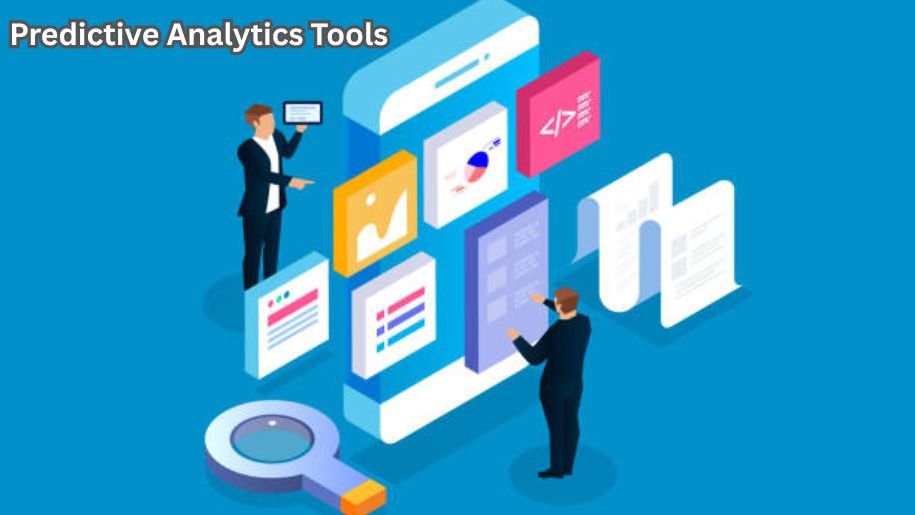

In today’s data-driven world, organizations generate massive amounts of data every second. However, raw data alone has little value unless it can be transformed into meaningful insights. This is where predictive analytics tools come into play. These tools help businesses and individuals anticipate future outcomes by analyzing historical data, identifying patterns, and applying statistical and machine learning techniques.
Predictive analytics has evolved significantly over the past decade, moving from complex, expert-only systems to more accessible platforms that even non-technical users can operate. As a result, companies across industries—ranging from finance and healthcare to retail and manufacturing—are increasingly relying on predictive analytics tools to stay competitive and make informed decisions.
This article provides a detailed yet clear explanation of predictive analytics tools, including their features, types, applications, benefits, challenges, and future trends.
What Are Predictive Analytics Tools?
Predictive analytics tools are software applications that use historical and current data to forecast future events. They rely on techniques such as statistical modeling, data mining, and machine learning to identify patterns and trends.
Instead of simply describing what has happened in the past, these tools focus on answering questions like:
- What is likely to happen next?
- Which customers are at risk of leaving?
- When will a machine fail?
- How will sales perform in the coming months?
By providing answers to such questions, predictive analytics tools enable proactive decision-making rather than reactive responses.
How Predictive Analytics Tools Work
Predictive analytics tools operate through a series of interconnected processes. First, they collect data from various sources such as databases, cloud platforms, sensors, and applications. This data is then cleaned and prepared to ensure accuracy and consistency.
Once the data is ready, the tool applies algorithms to build predictive models. These models identify relationships within the data and use them to generate forecasts. After model development, the results are visualized through dashboards, charts, or reports, making it easier for users to interpret insights.
Finally, many modern tools continuously learn from new data, improving their predictions over time. This iterative process makes predictive analytics increasingly accurate and valuable.
Key Features of Predictive Analytics Tools
Predictive analytics tools are equipped with a wide range of features that support data analysis and forecasting.
One of the most important features is data integration. These tools can connect to multiple data sources, including structured and unstructured data, allowing users to work with comprehensive datasets. Data preparation capabilities are equally important, as they help clean, transform, and organize data for analysis.
Another critical feature is modeling and machine learning. Predictive analytics tools offer various algorithms such as regression analysis, classification models, clustering techniques, and time-series forecasting. These algorithms enable users to build models tailored to specific use cases.
Visualization is another essential aspect. Tools often include interactive dashboards that display predictions in a user-friendly format. This makes it easier for decision-makers to understand insights without needing deep technical expertise.
Many tools also provide automation features. AutoML (Automated Machine Learning) allows users to build and deploy models with minimal manual effort. Additionally, explainability features help users understand how predictions are generated, increasing trust in the results.
Types of Predictive Analytics Tools
Predictive analytics tools can be categorized based on their functionality and target users.
Enterprise-Level Platforms
These are comprehensive tools designed for large organizations. They offer advanced capabilities such as large-scale data processing, complex modeling, and integration with enterprise systems. These platforms are typically used by data scientists and analysts working on large datasets.
Data Science and Machine Learning Platforms
These tools focus on providing advanced modeling capabilities. They are often used by professionals who require flexibility and control over algorithms and workflows. Such platforms support coding languages and allow customization of models.
Low-Code and No-Code Tools
These tools are designed for users with limited technical expertise. They provide drag-and-drop interfaces and simplified workflows, making predictive analytics accessible to business users. Despite their simplicity, they often include powerful features.
Business Intelligence Tools with Predictive Capabilities
Some business intelligence tools now include predictive analytics features. These tools combine data visualization with forecasting, enabling users to analyze trends and make predictions within a single platform.
Cloud-Based Predictive Analytics Tools
Cloud platforms offer scalability and flexibility. They allow users to process large volumes of data without investing in on-premise infrastructure. These tools are particularly useful for organizations looking to scale their analytics capabilities quickly.
Applications of Predictive Analytics Tools
Predictive analytics tools are used across a wide range of industries, each benefiting from their ability to forecast and optimize outcomes.
In the business and marketing sector, these tools help predict customer behavior. Companies can identify which customers are likely to churn, which products will sell the most, and how to personalize marketing campaigns for better engagement.
In finance, predictive analytics is used for fraud detection and risk management. By analyzing transaction patterns, tools can identify suspicious activities and prevent financial losses. Credit scoring is another important application, helping lenders assess the risk of borrowers.
Healthcare organizations use predictive analytics to improve patient outcomes. Tools can predict disease progression, identify high-risk patients, and optimize treatment plans. This not only enhances patient care but also reduces costs.
In manufacturing, predictive analytics plays a crucial role in maintenance. By analyzing machine data, tools can predict when equipment is likely to fail, allowing companies to perform maintenance proactively and avoid downtime.
Retail businesses use predictive analytics for demand forecasting and inventory management. By predicting future demand, companies can ensure that products are available when needed, reducing both stockouts and excess inventory.
Benefits of Predictive Analytics Tools
Predictive analytics tools offer numerous advantages that make them essential for modern organizations.
One of the most significant benefits is improved decision-making. By providing data-driven insights, these tools help organizations make informed choices rather than relying on intuition.
Another benefit is increased efficiency. Predictive analytics can automate processes and identify areas for optimization, saving time and resources. For example, businesses can streamline supply chains or optimize staffing levels based on predicted demand.
Risk reduction is also a key advantage. By identifying potential risks in advance, organizations can take preventive measures. This is particularly important in industries such as finance and healthcare, where risks can have serious consequences.
Predictive analytics also enhances customer experience. By understanding customer preferences and behavior, businesses can deliver personalized services and improve satisfaction.
Challenges of Using Predictive Analytics Tools
Despite their benefits, predictive analytics tools come with certain challenges.
Data quality is one of the biggest issues. Inaccurate or incomplete data can lead to unreliable predictions. Organizations must ensure that their data is clean and well-managed.
Another challenge is model complexity. Building accurate predictive models requires expertise in statistics and machine learning. While AutoML has simplified this process, some level of technical knowledge is still necessary.
Integration with existing systems can also be difficult. Organizations often use multiple systems, and ensuring seamless integration can be complex and time-consuming.
Additionally, there are concerns about data privacy and security. Predictive analytics often involves sensitive data, and organizations must ensure that this data is protected.
Choosing the Right Predictive Analytics Tool
Selecting the right predictive analytics tool depends on several factors.
The skill level of users is an important consideration. Organizations with experienced data scientists may prefer advanced platforms, while those with non-technical users may benefit from low-code tools.
The size and complexity of data also play a role. Large datasets require tools with strong processing capabilities and scalability.
Budget is another factor. Some tools are expensive and require significant investment, while others offer more affordable options.
Finally, organizations should consider their specific use cases. Different tools are designed for different purposes, and choosing one that aligns with business goals is essential.
Future Trends in Predictive Analytics Tools
Predictive analytics tools are continuously evolving, driven by advancements in technology.
One major trend is the integration of artificial intelligence. AI-powered tools are becoming more accurate and capable, enabling more sophisticated predictions.
Another trend is increased accessibility. As tools become more user-friendly, a wider range of users can leverage predictive analytics without needing extensive technical knowledge.
Real-time analytics is also gaining importance. Organizations are increasingly looking for tools that can provide instant insights based on live data.
Explainability is another emerging focus. As predictive models become more complex, there is a growing need to understand how predictions are made. Tools are incorporating features that make models more transparent and interpretable.
Conclusion
Predictive analytics tools have become a cornerstone of modern decision-making. By transforming data into actionable insights, these tools enable organizations to anticipate future trends, reduce risks, and improve efficiency.
From enterprise platforms to user-friendly no-code solutions, predictive analytics tools cater to a wide range of needs and skill levels. While challenges such as data quality and model complexity exist, the benefits far outweigh the limitations.
As technology continues to advance, predictive analytics tools will become even more powerful and accessible, playing an increasingly important role in shaping the future of business and innovation.
Frequently Asked Questions
What is the main purpose of predictive analytics tools?
The main purpose is to analyze historical data and predict future outcomes, helping organizations make proactive and informed decisions.
Do predictive analytics tools require coding skills?
Not always. Many modern tools offer no-code or low-code interfaces, allowing non-technical users to build predictive models easily.
Which industries benefit the most from predictive analytics?
Industries such as finance, healthcare, retail, manufacturing, and marketing benefit significantly from predictive analytics.
How accurate are predictive analytics tools?
Accuracy depends on data quality, model selection, and implementation. With high-quality data and proper models, predictions can be highly reliable.
What is the difference between predictive and descriptive analytics?
Descriptive analytics focuses on understanding past data, while predictive analytics uses that data to forecast future outcomes.