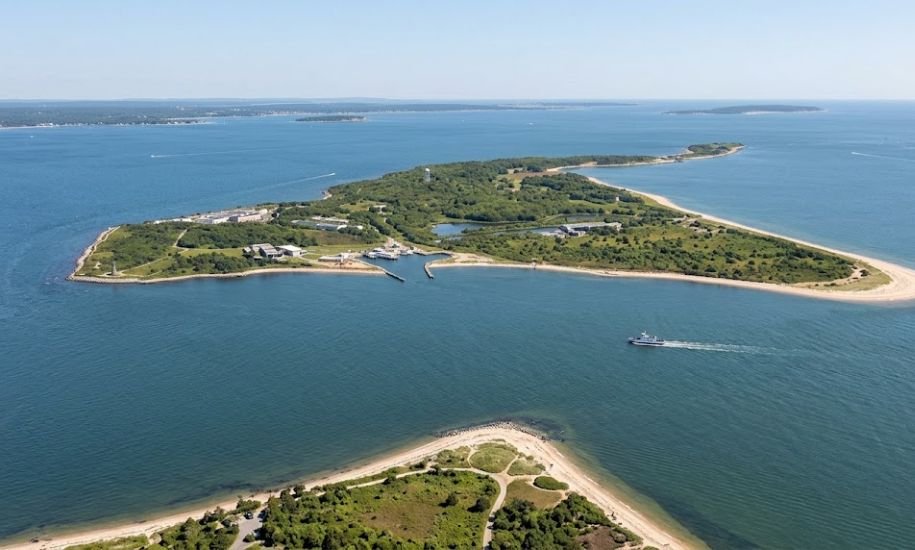

Just off the northeastern tip of Long Island sits a place that most people will never step foot on—yet it continues to spark curiosity, debate, and even conspiracy theories.
Plum Island Southold NY 11957 isn’t your typical destination. There are no hotels, no beaches open to the public, and no tourist attractions you can simply walk into. And that’s exactly what makes it so fascinating.
So what’s really going on there? Why is it off-limits? And is there any truth behind the rumors?
Let’s break it all down—factually, clearly, and without the fluff you’ll find elsewhere.
Where Is Plum Island Located?
Plum Island lies just off the coast of Orient Point, at the far eastern end of Long Island, New York. It’s technically part of the town of Southold, within the ZIP code 11957.
At a glance:
- About 1.5 miles from Long Island
- Sits between Long Island and Fishers Island
- Visible from certain coastal viewpoints on clear days
From the mainland, it doesn’t look particularly unusual—just another quiet island. But its proximity to populated areas makes its restricted status even more intriguing.
What Is Plum Island?
At its core, Plum Island is a federally owned research facility site, historically used for studying animal diseases that could threaten agriculture.
For decades, it housed the Plum Island Animal Disease Center (PIADC)—a high-security lab focused on foreign animal diseases like foot-and-mouth disease.
Quick facts:
- Size: ~840 acres
- Ownership: U.S. federal government
- Established: Late 1800s (military origins)
- Status: Restricted access
Unlike typical research centers, its isolation is intentional—designed to prevent any accidental spread of pathogens to the mainland.
The History of Plum Island (A Story Few Tell Well)
Most articles skim over this. But understanding Plum Island means understanding its evolution over time.
Early Use & Military Beginnings
Before it became a research hub, Plum Island was home to Fort Terry, established in 1897. Its purpose? Coastal defense.
Back then, the island played a strategic role in protecting New York from naval threats. You can still find remnants of military structures today.
Cold War Era Transformation
After World War II, the island’s purpose shifted dramatically.
In 1954, the U.S. government converted it into a bio-research facility. The logic was simple but critical:
If you’re studying dangerous animal diseases, do it somewhere isolated.
This marked the birth of the Plum Island Animal Disease Center.
Modern Era and Transition
For decades, the facility operated under tight security. But in recent years, things changed:
- Research operations began shifting to a new facility in Kansas
- Plans to sell the island were proposed
- Public backlash and environmental concerns halted those plans
As of 2026, the island remains in a kind of limbo—no longer fully active, but still restricted.
Why Is Plum Island Restricted?
This is the question most people actually want answered.
The short version: biosecurity and safety.
The longer explanation:
- The island hosted research on highly contagious animal diseases
- These diseases could devastate livestock industries if released
- Isolation minimizes risk of accidental spread
Even today, despite reduced activity, access remains tightly controlled.
There’s also another factor people often overlook:
Infrastructure risk — the island isn’t built for tourism or public safety.
So it’s not just secrecy—it’s practicality.
Can You Visit Plum Island?
No—you cannot visit Plum Island.
There are:
- No public tours
- No ferry services
- No legal access points
Only authorized personnel have ever been allowed on the island.
And despite its quiet appearance, enforcement is taken seriously.
What’s Happening on Plum Island Today (2026 Update)
Here’s where most articles become outdated.
As of now:
- The original research facility has largely transitioned operations to Kansas
- The island is still federally owned
- Conservation groups are pushing for it to become a national wildlife refuge
This creates a unique situation:
Plum Island is no longer at its peak operational use—but still not open to the public.
Think of it as a protected, paused space, waiting for its next chapter.
Plum Island Myths vs Reality
Let’s address the elephant in the room.
Plum Island has been the subject of countless theories—some entertaining, others wildly misleading.
Myth 1: Plum Island Created Lyme Disease
Reality:
There’s no credible scientific evidence supporting this. Lyme disease was identified in Connecticut, but its origins are linked to natural ecological factors—not lab creation.
Myth 2: Secret Biological Weapons Testing
Reality:
The facility focused on animal disease research, not weaponization. While secrecy existed (as with many Cold War-era projects), there’s no verified proof of weapons programs.
Myth 3: Dangerous Experiments Still Ongoing
Reality:
Most research operations have moved elsewhere. The island is far less active than it once was.
Why These Myths Persist
Because Plum Island checks all the boxes:
- Restricted access
- Government ownership
- Scientific research
- Historical secrecy
That combination naturally fuels speculation.
Wildlife and Environmental Importance
Ironically, what made Plum Island ideal for research also makes it a perfect ecological sanctuary.
Because human activity has been limited for decades, the island has become:
- A major bird migration stop
- Home to diverse coastal ecosystems
- A relatively untouched natural habitat
Conservationists argue that opening it to development would destroy something rare:
A large, preserved ecosystem near one of the busiest regions in the U.S.
What to Do Near Plum Island (Since You Can’t Visit)
Here’s where most guides fail—they stop at “you can’t go.”
But the surrounding area offers plenty.
1. Orient Beach State Park
- Stunning coastal views
- Birdwatching opportunities
- Some of the best vantage points toward Plum Island
2. Plum Island Lighthouse (View from Afar)
- Historic structure on the island
- Visible by boat or from distance
3. Boat Tours Around the Area
While you can’t land on the island, some tours pass nearby, offering:
- Unique photo opportunities
- A closer (but still legal) look
4. Explore Long Island’s Hidden Gems
The North Fork area is full of:
- Wineries
- Quiet beaches
- Scenic drives
In other words, even without access, the trip is still worth it.
Quick Facts About Plum Island
- Located in Southold, NY 11957
- Approximately 840 acres
- Former home of a high-security research facility
- Closed to the public
- Potential future wildlife refuge
Frequently Asked Questions
Why is Plum Island closed to the public?
Because of its history as a bio-research facility and ongoing federal control, access remains restricted for safety and security reasons.
Can you visit Plum Island in New York?
No. There are no public tours or legal ways to visit.
Is Plum Island dangerous?
Not inherently—but its past research activities and infrastructure make it unsuitable for public access.
Who owns Plum Island now?
The U.S. federal government still owns the island.
Is Plum Island related to Lyme disease?
There is no credible scientific evidence linking the island to the creation of Lyme disease
Will Plum Island ever open to the public?
Possibly—but more likely as a protected wildlife refuge, not a tourist destination
Final Thoughts: Why Plum Island Still Fascinates People
Plum Island isn’t just about science or secrecy—it’s about the unknown.
It represents something rare in today’s world:
A place that exists just out of reach.
And that’s why it continues to capture attention.
But when you strip away the myths, what remains is just as interesting:
- A critical piece of scientific history
- A protected natural environment
- A symbol of how curiosity fills in the gaps where access is denied
Conclusion (From Brit Feed)
At Brit Feed, we believe the most interesting stories aren’t always the loudest—they’re the ones hidden just beneath the surface.
Plum Island Southold NY 11957 is a perfect example of that.
If you found this guide helpful and want more deep dives into hidden places, mysteries, and lesser-known destinations, stay connected with Brit Feed.