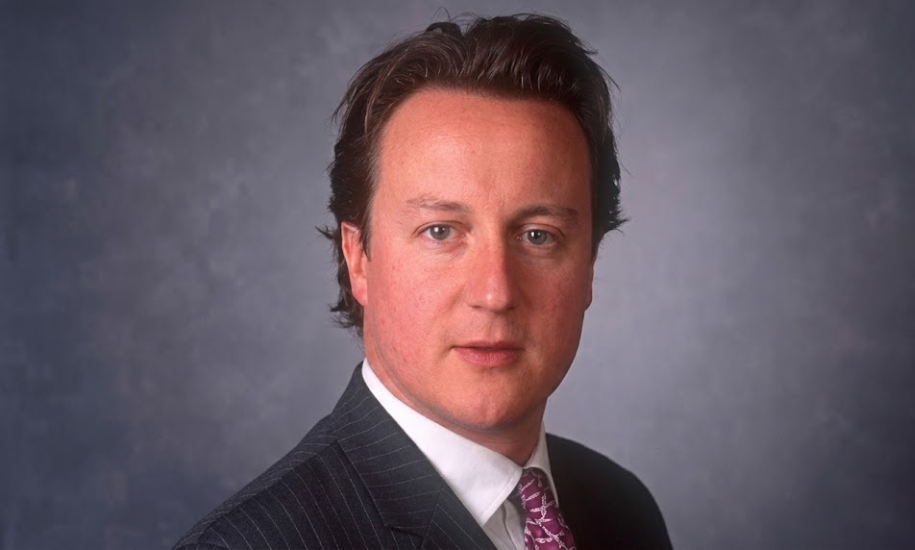

David Cameron is one of the most recognisable names in modern British political history. As the United Kingdom’s youngest Prime Minister in nearly 200 years, Cameron left an indelible mark on the country’s political landscape — first through bold domestic reforms, and then through a fateful decision to hold a referendum on European Union membership that ultimately ended his time in Downing Street. Beyond politics, Cameron has built a substantial personal fortune, with an estimated net worth of $50 million (approximately £40 million). This article takes a deep dive into David Cameron’s life, political career, wealth, and enduring legacy.
Early Life and Education
David William Donald Cameron was born on 9 October 1966 in Marylebone, London, into a family that blended aristocratic heritage with financial success. His father, Ian Donald Cameron, was a successful stockbroker, and his mother, Mary Fleur (née Mount), served as a Justice of the Peace. Cameron’s maternal grandfather, Sir William Mount, was the High Sheriff of Berkshire and an officer in the British Army — a lineage that planted the seeds of public service deep in the Cameron family DNA. Notably, Cameron is a descendant of King William IV, linking him to British royalty through one of the monarch’s illegitimate children.
Cameron grew up in Peasemore, Berkshire, and attended Heatherdown Preparatory School before earning a place at Eton College — one of Britain’s most exclusive and prestigious institutions. After completing his A-levels in 1984, Cameron took a gap year, during which he worked as a researcher for Conservative MP Tim Rathbone (also his godfather) and briefly as a “ship jumper” for Jardine Matheson in Hong Kong. He also travelled to the Soviet Union, where, according to reports, two KGB agents allegedly attempted to recruit him.
In autumn 1985, Cameron enrolled at Brasenose College, Oxford, where he studied Philosophy, Politics and Economics (PPE) — the traditional pathway for British political elites. He was a member of the controversial Bullingdon Club, an exclusive student dining society. In 1988, he graduated with a First Class Honours degree, a distinction that laid the academic foundation for his meteoric political rise.
The Road to Westminster
After Oxford, Cameron joined the Conservative Research Department (CRD) in 1988, quickly climbing through the ranks to lead its political section. In this role, he served as a media aide to Prime Minister John Major and developed a sharp understanding of political strategy and communications.
In 1992, he was appointed Special Adviser to Norman Lamont, Chancellor of the Exchequer — a significant step up. He later moved to the Home Office to advise Home Secretary Michael Howard. These years were crucial, giving Cameron an insider’s grasp of how government truly operates.
In mid-1994, Cameron transitioned to the private sector, becoming Director of Corporate Affairs at Carlton Communications, one of Britain’s major media companies. He remained there until 2001, briefly leaving in 1997 for an unsuccessful parliamentary bid. His second attempt in 2001 succeeded, and he was elected MP for the safe Conservative seat of Witney in Oxfordshire — a position he would hold until 2016.
David Cameron as Prime Minister (2010–2016)
Becoming the Youngest PM in Nearly 200 Years
David Cameron’s defining political moment came on 11 May 2010, when he was invited by Queen Elizabeth II to form a government following the general election — at just 43 years old, becoming the youngest Prime Minister since the Earl of Liverpool in 1812. No single party had secured an outright majority, resulting in a historic Conservative–Liberal Democrat coalition government, the UK’s first coalition since World War II. Deputy Prime Minister Nick Clegg of the Liberal Democrats served alongside Cameron.
Austerity and Economic Reform
Cameron inherited a country reeling from the 2008 global financial crisis. His Chancellor, George Osborne, introduced one of the most sweeping austerity programmes in British history, slashing public spending, restructuring welfare, and reducing the national deficit. While the deficit did shrink over time, critics argued that austerity deepened inequality, slowed economic recovery, and contributed to rising political discontent — tensions that would later fuel the Brexit vote.
Social and Domestic Achievements
Despite the austerity agenda, Cameron’s government delivered several landmark social reforms. In 2013, his government legalised same-sex marriage in England and Wales — a historic step that Cameron himself championed against resistance within his own party. His government also oversaw the successful staging of the 2012 London Olympic Games, a moment of national pride that boosted Britain’s global image.
Cameron reformed education by opening government-funded free schools, privatised the Royal Mail, and introduced a stricter immigration policy. He also made a significant commitment to international development, pledging that the UK would spend 0.7% of national income on overseas aid — making Britain one of the world’s leading donors.
Re-election and the Brexit Gamble
In May 2015, Cameron achieved something rare in British politics: he led the Conservatives to a majority government after a full term in coalition, becoming the first Prime Minister since Lord Salisbury in 1900 to be re-elected with an increased popular vote share. With a parliamentary majority of 12, he now faced the challenge he had long deferred.
As promised in his election manifesto, Cameron set a date for a referendum on the UK’s membership of the European Union. He renegotiated the terms of Britain’s EU membership and announced he would campaign for Britain to remain within a reformed EU. The referendum was held on 23 June 2016. The result stunned the world: approximately 52% voted to leave the European Union, with a turnout of 72%. The morning after, Cameron appeared outside 10 Downing Street and announced his resignation, stating that the country needed a leader who believed in the direction it had chosen.
His departure marked the end of a six-year premiership defined by both genuine achievement and the most consequential political miscalculation in modern British history.
Post-Premiership Career
After leaving office, Cameron maintained a relatively low profile, but he remained active in public life. In 2016, he founded the Office of David Cameron, a company to manage his speaking engagements and media work, which had accumulated net assets of £790,274 by 2018.
In 2018, Cameron became a paid adviser to Greensill Capital, a financial services firm, earning over $1 million per year for approximately 25 days of work annually. He also held share options reportedly worth up to $60 million in the company. However, Greensill Capital collapsed in 2021, and Cameron’s lobbying of government officials on its behalf sparked a significant scandal and a full parliamentary inquiry.
In a remarkable political comeback, Cameron was appointed Secretary of State for Foreign, Commonwealth and Development Affairs on 13 November 2023 by Prime Minister Rishi Sunak. He was simultaneously elevated to the House of Lords as Baron Cameron of Chipping Norton, allowing him to serve in government without being an elected MP. He held the role until July 2024, during which he visited 35 countries and was heavily involved in the UK’s response to the Gaza conflict and Russia’s ongoing invasion of Ukraine.
David Cameron’s Net Worth: How Did He Build a $50 Million Fortune?
David Cameron’s estimated net worth stands at approximately $50 million (around £40 million), a figure that reflects multiple income streams accumulated over decades in politics, business, and publishing.
Parliamentary and Prime Ministerial Salary — As Prime Minister, Cameron earned approximately £142,500 per year. Over his six-year tenure, this amounts to roughly £850,000 — a solid foundation, but far from the bulk of his wealth.
Memoir and Publishing Deals — In 2016, Cameron signed an £800,000 contract with HarperCollins UK for his memoir, For the Record, which was published in September 2019. The book offers a candid look at life in Downing Street and was lauded by the Sunday Times as the political memoir of the decade.
Speaking Engagements and Consulting — As a former world leader, Cameron commands substantial fees on the international speaking circuit. His Office of David Cameron has handled a stream of lucrative engagements globally since leaving office.
Greensill Capital — Cameron’s advisory role at Greensill Capital was among his highest-paying post-political ventures, though it ultimately became a major reputational liability following the firm’s collapse in 2021.
Family Inheritance — Cameron was born into wealth. Upon his father Ian’s death, Cameron received £300,000 as his share of the estate. He also held shares in his father’s offshore investment fund, Panamanian Blairmore Holdings, which he sold just before becoming Prime Minister for £31,500, netting a £19,000 profit. The 2016 Panama Papers revelations brought this investment under intense public scrutiny.
Property Portfolio — Cameron and his wife Samantha own impressive properties, including a Cotswolds home in Chipping Norton purchased for £650,000 in 2001, and a £2 million holiday home in Trebetherick, Cornwall.
Personal Life and Family
David Cameron is married to Samantha Sheffield, daughter of Sir Reginald Sheffield. Together they have three children. Tragically, their eldest child, Ivan, who suffered from severe cerebral palsy and epilepsy, passed away in February 2009. Cameron has spoken about this loss as the most painful experience of his life, and it is widely credited with deepening his personal commitment to the NHS and the wider care sector.
Legacy and Historical Assessment
David Cameron’s legacy is complex and deeply contested. On one hand, he modernised the Conservative Party, legalised same-sex marriage, steered the economy through a difficult recovery, and placed Britain at the forefront of global development aid. On the other hand, his decision to hold the Brexit referendum — largely driven by the desire to manage divisions within his own party — is widely regarded as one of the most consequential political gambles in British democratic history. It ended his own career, triggered years of political instability, and reshaped the UK’s relationship with Europe for a generation.
Historians and political commentators have placed Cameron in the third or fourth quintile of Prime Ministerial rankings, acknowledging his competence while recognising the magnitude of the Brexit miscalculation. As Cameron himself admitted, every single day he thought about the outcome, the consequences, and what could have been done differently. That haunting reflection perhaps sums up his legacy better than any policy achievement or financial milestone ever could.
Discover More at Brit Feed
If you found this profile on David Cameron insightful, there is plenty more where that came from. At Brit Feed, we bring you in-depth coverage of British politics, public figures, celebrity net worths, and the stories that shape modern Britain. Whether you are curious about former Prime Ministers, current political affairs, or the financial lives of the UK’s most influential personalities, Brit Feed is your go-to source for well-researched, engaging British content. Visit us and stay informed — the British way.
you may also read Barney Ronay: The Voice Redefining Modern Football Writing