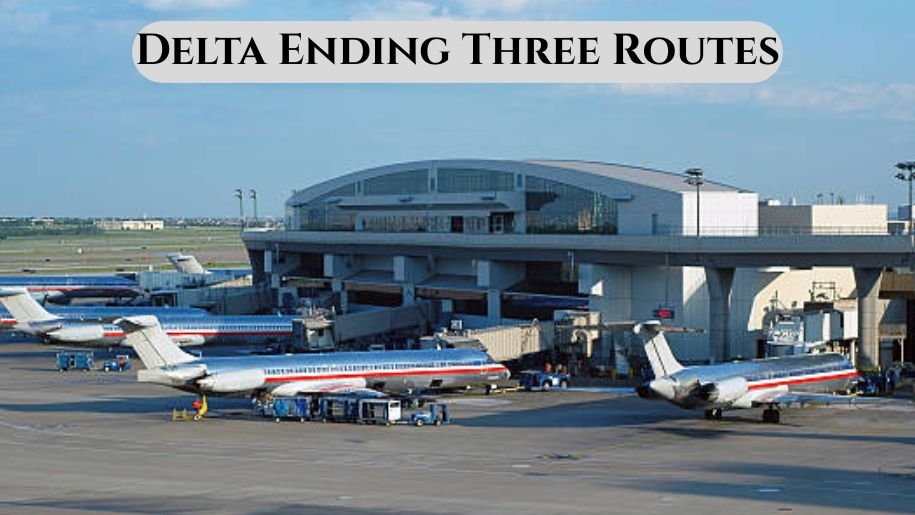

Airlines constantly adjust their route networks to match passenger demand, economic conditions, and operational efficiency. Even large global carriers regularly add new destinations while discontinuing routes that no longer perform well. In recent network adjustments, Delta Air Lines announced that it would end three specific routes as part of a broader strategy to optimize its flight network.
While removing routes may seem like a small operational change, such decisions are often the result of detailed analysis involving passenger demand, aircraft utilization, operating costs, competition, and long-term strategic planning. For passengers and industry observers, these changes can offer insight into evolving travel patterns and airline priorities.
This article explores the decision by Delta Air Lines to end three routes—Atlanta to Fresno, Detroit to San Jose, and Salt Lake City to Toronto—and examines why airlines make such adjustments, what it means for travelers, and how it fits into the airline’s overall strategy.
Understanding Delta Air Lines
Delta Air Lines is one of the largest airlines in the world and a major player in global aviation. Founded in 1925, the airline has grown into a massive network carrier serving hundreds of destinations across North America, Europe, Asia, and beyond.
The airline operates major hubs in cities such as:
- Hartsfield–Jackson Atlanta International Airport
- Detroit Metropolitan Wayne County Airport
- Salt Lake City International Airport
- Minneapolis–Saint Paul International Airport
These hubs allow Delta to connect passengers between numerous domestic and international destinations efficiently.
Because of the scale of its operations, Delta regularly reviews its network to ensure routes remain profitable and strategically important. When a route consistently underperforms or when aircraft can be used more effectively elsewhere, the airline may decide to discontinue that service.
Overview of the Three Routes Being Discontinued
Delta’s recent decision involves ending three routes that connect major U.S. hubs with other cities in North America. These routes are:
- Atlanta to Fresno
- Detroit to San Jose
- Salt Lake City to Toronto
Each route served a specific market but ultimately faced challenges such as competition, demand shifts, and operational considerations.
Although the discontinuation may affect some travelers, the airline maintains many alternative routes and connections that can still serve these destinations through other hubs.
Atlanta to Fresno Route
Route Background
The route connecting Hartsfield–Jackson Atlanta International Airport with Fresno Yosemite International Airport linked the southeastern United States with California’s Central Valley.
Atlanta is one of Delta’s most important hubs and the busiest airport in the world, while Fresno serves as a gateway to central California and nearby national parks.
This route was designed to provide convenient connections for travelers moving between the southeastern U.S. and California’s interior regions.
Reasons for Discontinuation
Several factors contributed to the decision to end the Atlanta–Fresno service.
One key reason was limited demand compared to other California routes. While cities like Los Angeles and San Francisco attract large volumes of passengers, Fresno serves a smaller regional market. This often results in lower passenger loads on flights.
Another factor was competition from nearby airports. Travelers in the region sometimes choose larger airports within driving distance because they offer more flight options and lower fares.
Operating costs also play a role. Long domestic routes require significant fuel, crew resources, and aircraft time. If the revenue generated does not meet expectations, airlines often shift those aircraft to routes with stronger demand.
Impact on Travelers
Passengers traveling between Atlanta and Fresno will still have options through connecting flights. Travelers may connect through larger West Coast hubs such as Los Angeles or Seattle to reach Fresno.
Although the nonstop route offered convenience, alternative connections still allow passengers to reach the destination with only a small increase in travel time.
Detroit to San Jose Route
Route Overview
The second discontinued route connected Detroit Metropolitan Wayne County Airport with San Jose International Airport.
Detroit serves as a major Delta hub in the Midwest, while San Jose is located in the heart of Silicon Valley. The route was particularly relevant for business travelers involved in the technology industry.
Market Dynamics
Despite the strong technology economy in Silicon Valley, the Detroit–San Jose route faced several challenges.
One major factor was competition from nearby airports. Many travelers flying to Silicon Valley choose larger airports such as San Francisco because they offer more flight options and airline choices.
Additionally, changes in corporate travel patterns have influenced demand. In recent years, remote work and virtual meetings have reduced the number of business trips taken by employees in certain industries.
Airlines closely monitor these trends because business travelers traditionally generate higher revenue than leisure passengers.
Operational Considerations
Aircraft allocation is another important factor in route decisions. Delta operates a large fleet but must carefully decide where each aircraft will generate the most revenue.
If a route consistently operates with low seat occupancy or reduced profitability, shifting the aircraft to a stronger route can significantly improve the airline’s overall performance.
Passenger Alternatives
Travelers flying between Detroit and Silicon Valley can still reach San Jose with a connecting flight. Alternatively, they can fly directly to nearby San Francisco and travel by ground transportation to Silicon Valley.
Salt Lake City to Toronto Route
Route Background
The third route scheduled for discontinuation connected Salt Lake City International Airport with Toronto Pearson International Airport.
Salt Lake City is an important Delta hub for western United States travel, while Toronto is Canada’s largest city and a major international aviation gateway.
This route offered a direct connection between western U.S. travelers and Canada’s financial and cultural center.
Factors Behind the Decision
International routes often face more complex challenges than domestic routes.
Passenger demand fluctuates depending on tourism trends, economic conditions, and seasonal travel patterns. If the number of travelers between two cities does not remain consistent throughout the year, airlines may struggle to maintain profitability.
Competition from other airlines and connecting flights can also reduce demand for nonstop service. Travelers may choose different routes if prices are lower or schedules are more convenient.
Operational costs are another factor. International flights require additional regulatory compliance, airport fees, and logistical planning, which can increase expenses compared to domestic flights.
Effects on Travelers
Passengers traveling between Salt Lake City and Toronto can still reach their destination through connecting flights. Common connection points may include major hubs in the United States or Canada.
While the removal of a nonstop option may add some travel time, the route network still provides multiple alternatives for passengers.
Why Airlines Regularly Adjust Routes
Airline route networks are constantly evolving. A route that performs well one year may become less profitable the next due to changing travel patterns or economic conditions.
Several major factors influence these decisions.
Passenger Demand
Airlines carefully track passenger numbers on each route. If flights frequently depart with many empty seats, the route may not generate enough revenue to cover costs.
Competition
Competition from other airlines can significantly affect a route’s profitability. When multiple airlines serve the same route, ticket prices often drop, reducing profit margins.
Aircraft Efficiency
Modern airlines aim to use their aircraft as efficiently as possible. If an aircraft can generate more revenue on another route, it may be reassigned.
Economic Trends
Economic changes can alter travel demand. Business travel, tourism, and international trade all influence the number of passengers flying between cities.
Strategic Implications for Delta
For Delta, ending these three routes is not a sign of decline but rather part of routine network management.
Large airlines continuously evaluate performance data and adjust their schedules accordingly. By removing underperforming routes, they can focus on expanding destinations with stronger demand.
This strategy helps airlines maintain profitability and invest in improved passenger experiences, including upgraded cabins, new aircraft, and expanded international services.
Broader Industry Context
The airline industry is highly competitive and sensitive to economic changes. Airlines must respond quickly to fluctuations in fuel prices, travel demand, and global events.
In recent years, airlines worldwide have adjusted routes to reflect new travel patterns, particularly following changes in business travel and international tourism.
Delta’s decision to discontinue these routes reflects broader trends across the aviation industry, where flexibility and adaptability are essential for long-term success.
Conclusion
The decision by Delta Air Lines to discontinue three routes—Atlanta to Fresno, Detroit to San Jose, and Salt Lake City to Toronto—illustrates how airlines continuously refine their networks to match evolving market conditions.
While these changes may inconvenience some travelers who relied on nonstop flights, alternative connections remain available through Delta’s extensive hub network.
Ultimately, such decisions are driven by careful analysis of passenger demand, operational efficiency, and long-term strategic goals. By reallocating resources to stronger routes, Delta can continue strengthening its position as one of the world’s leading airlines while maintaining a competitive and efficient flight network.
Frequently Asked Questions
Why is Delta ending three routes?
Delta is discontinuing the routes due to factors such as lower passenger demand, operational costs, and the need to allocate aircraft to more profitable routes.
Which routes is Delta ending?
The routes being discontinued are Atlanta to Fresno, Detroit to San Jose, and Salt Lake City to Toronto.
When will these routes stop operating?
The routes are scheduled to be removed from Delta’s flight schedule during its network adjustments in 2025.
Will passengers still be able to travel between these cities?
Yes. Travelers can still reach these destinations using connecting flights through other Delta hubs or nearby airports.
Do airlines frequently remove routes?
Yes. Airlines regularly adjust their networks by adding new destinations and discontinuing routes that are no longer profitable or in high demand.