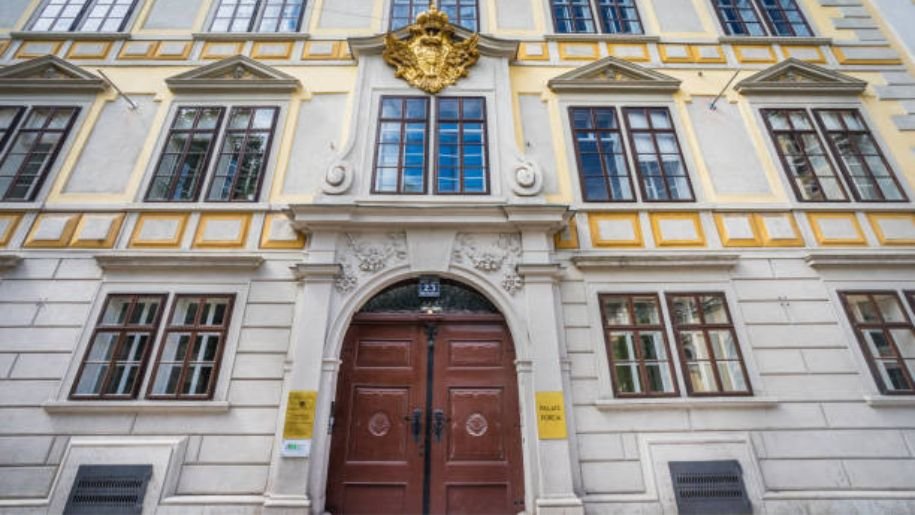

The phrase “Mozart Death House” refers to the final residence of Wolfgang Amadeus Mozart, the legendary composer who died on 5 December 1791 in Vienna at the age of thirty-five. Though the original building no longer stands in its eighteenth-century form, the location at Rauhensteingasse 8 in Vienna remains a site of historical importance and quiet reflection. Visitors who seek out this address are often surprised to discover that there is no preserved apartment to tour. Instead, what survives is memory—anchored by plaques, documentation, and centuries of cultural reverence.
This article explores the history, context, myths, and present-day significance of Mozart’s death house in detail, offering a clear understanding of why this site continues to captivate admirers from around the world.
The Historical Setting: Vienna in 1791
In 1791, Vienna was one of Europe’s most vibrant cultural capitals. Music flourished under aristocratic patronage, and composers navigated a competitive but creatively rich environment. Mozart had moved to Vienna years earlier, seeking independence from Salzburg and greater artistic opportunity.
By the time of his final months, however, Mozart’s financial and physical condition had become unstable. Despite periods of remarkable productivity—including work on The Magic Flute and the unfinished Requiem—his health began to deteriorate in late 1791.
He was living in a spacious apartment in the city center, located in the building known at the time as the “Kleines Kayserhaus” (Small Imperial House), situated at Rauhensteingasse 8. It was here that his life came to an abrupt end.
Location of Mozart’s Death House
The site of Mozart’s death house lies in the historic center of Vienna, not far from St. Stephen’s Cathedral. The narrow streets of this district still reflect the architectural character of the old city, although many buildings have undergone reconstruction over the centuries.
The original eighteenth-century structure where Mozart died no longer exists in its original form. It was demolished and rebuilt in the mid-nineteenth century. Today, a memorial plaque on the building marks the approximate location of the apartment where he spent his final days.
While the physical interior is lost to time, the address itself remains historically verified as the place of his death.
Mozart’s Final Months
Mozart’s last year was one of intense productivity. In 1791 alone, he composed several major works, including:
- The opera Die Zauberflöte (The Magic Flute)
- The Clarinet Concerto
- The unfinished Requiem
Despite financial pressures and declining health, he continued composing almost until the end. Accounts from contemporaries describe his sudden illness as involving swelling, fever, and severe discomfort. He became bedridden in late November 1791.
On 5 December 1791, shortly after midnight, Mozart died in the apartment at Rauhensteingasse 8. His wife, Constanze, and a few close companions were present during his final hours.
What Happened to the Original Building?
One of the most common misconceptions is that visitors can still see Mozart’s preserved death chamber. In reality, the original building was demolished decades after his death as Vienna modernized its urban layout.
The current structure occupying the site is a later construction. However, the memorial plaque installed on the façade commemorates the historic importance of the location. It serves as a reminder that within those walls once stood the final home of one of history’s greatest composers.
The absence of the original building has not diminished the site’s symbolic power. Instead, it has transformed the location into a quiet place of contemplation rather than a traditional museum.
Distinguishing the Death House from Mozarthaus Vienna
Many travelers confuse the death house with the well-known museum Mozarthaus Vienna. These are not the same location.
Mozarthaus Vienna, located on Domgasse, is the only surviving Viennese apartment where Mozart lived that still exists in preserved form. It has been converted into a museum showcasing his life, work, and historical context.
By contrast, the death house at Rauhensteingasse 8 is not a museum and does not contain original interiors. It is a marked historical site rather than a curated exhibition space.
Understanding this distinction is important for visitors planning their historical exploration of Mozart’s Vienna.
Burial and the Mystery of the Grave
After his death, Mozart was buried in accordance with Viennese customs of the time. He was interred in a common grave at St. Marx Cemetery (Sankt Marxer Friedhof).
Contrary to popular belief, he was not buried in a pauper’s grave. At the time, communal graves were standard practice for middle-class citizens. Individual marked graves were not typical unless one belonged to high nobility.
The exact location of his remains is unknown today, although a memorial stands at St. Marx Cemetery marking the approximate area of burial.
This has contributed to enduring myths about poverty, neglect, and mystery surrounding his death.
Myths Surrounding the Death House
Was Mozart Poisoned?
One of the most persistent legends claims that Mozart was poisoned, sometimes implicating fellow composer Antonio Salieri. However, no historical evidence supports this accusation. Medical historians suggest natural illness as the likely cause, though the exact diagnosis remains debated.
The death house has therefore become linked not only with Mozart’s passing but also with the dramatic myths that followed.
Was He Destitute?
While Mozart experienced financial instability, he was not completely impoverished at the time of his death. His burial in a communal grave was consistent with social norms rather than evidence of disgrace.
Did He Finish the Requiem There?
Mozart worked on the Requiem in the apartment, but he did not complete it. After his death, his student Franz Xaver Süssmayr finished the composition based on Mozart’s sketches and instructions.
Architectural and Urban Context
The neighborhood around Rauhensteingasse remains part of Vienna’s historic inner district. Narrow streets, stone façades, and preserved urban design give visitors a sense of the eighteenth-century environment, even though many buildings are later reconstructions.
Standing before the memorial plaque, one can imagine the bustling musical life of Vienna in 1791. Horse-drawn carriages, candlelit interiors, and aristocratic salons once defined this area. Mozart’s final residence was embedded in this cultural landscape.
Though the physical structure has changed, the spatial memory of the location remains intact within the city’s historic core.
Cultural Significance Today
The death house symbolizes several intertwined themes:
- The fragility of genius
- The human reality behind legendary figures
- The dramatic contrast between artistic immortality and physical mortality
Unlike grand monuments or ornate museums, this site is modest. Its simplicity reflects the quiet, private nature of Mozart’s final moments.
For music historians, the location represents the end of the Classical era’s most extraordinary creative voice. For general visitors, it serves as a powerful reminder that even towering figures of culture lived and died in ordinary domestic spaces.
Visiting the Site Today
Visitors to Vienna can easily walk to Rauhensteingasse 8 from St. Stephen’s Cathedral. The site is publicly accessible, as it is part of a residential and commercial area.
There is no entrance fee, no ticket desk, and no interior tour. The experience is contemplative rather than interactive.
Many visitors combine a visit to the death house with:
- Mozarthaus Vienna
- St. Marx Cemetery
- Concert performances of Mozart’s works
This creates a fuller understanding of his life, work, and final chapter.
Emotional and Historical Reflection
The idea of a “death house” often evokes solemn emotion. Yet Mozart’s final residence should not be viewed solely as a place of tragedy. It was also the site where he created music of transcendent beauty in his final weeks.
In that apartment, despite illness, he worked on the Requiem, a composition that would become one of the most revered sacred works in Western music. The setting thus connects mortality with artistic eternity.
Standing before the memorial plaque today, one does not see luxury or grandeur. Instead, one encounters a quiet reminder of the humanity of genius.
Why the Death House Still Matters
Mozart’s death house continues to fascinate because it represents the intersection of:
- History
- Music
- Urban transformation
- Myth and reality
Although the original walls no longer stand, the address remains permanently linked to the composer’s final breath. The building may have changed, but the historical significance has not diminished.
It is a place where fact and legend converge, and where visitors confront both the brevity of life and the enduring power of art.
Frequently Asked Questions (FAQs)
Does the original Mozart death house still exist?
No, the original eighteenth-century building was demolished in the nineteenth century. The present structure stands on the same site and features a commemorative plaque.
Can visitors enter the death house?
No, it is not a museum. Visitors can view the exterior and the memorial plaque only.
Is the death house the same as Mozarthaus Vienna?
No. Mozarthaus Vienna is a preserved apartment where Mozart once lived earlier. The death house is a different location at Rauhensteingasse 8.
Was Mozart buried in a pauper’s grave?
No. He was buried in a communal grave according to Viennese customs of the time. This was standard practice and not a sign of poverty.
What caused Mozart’s death?
The exact cause remains debated. Historical accounts describe fever and swelling, but no definitive medical diagnosis has been universally confirmed.